
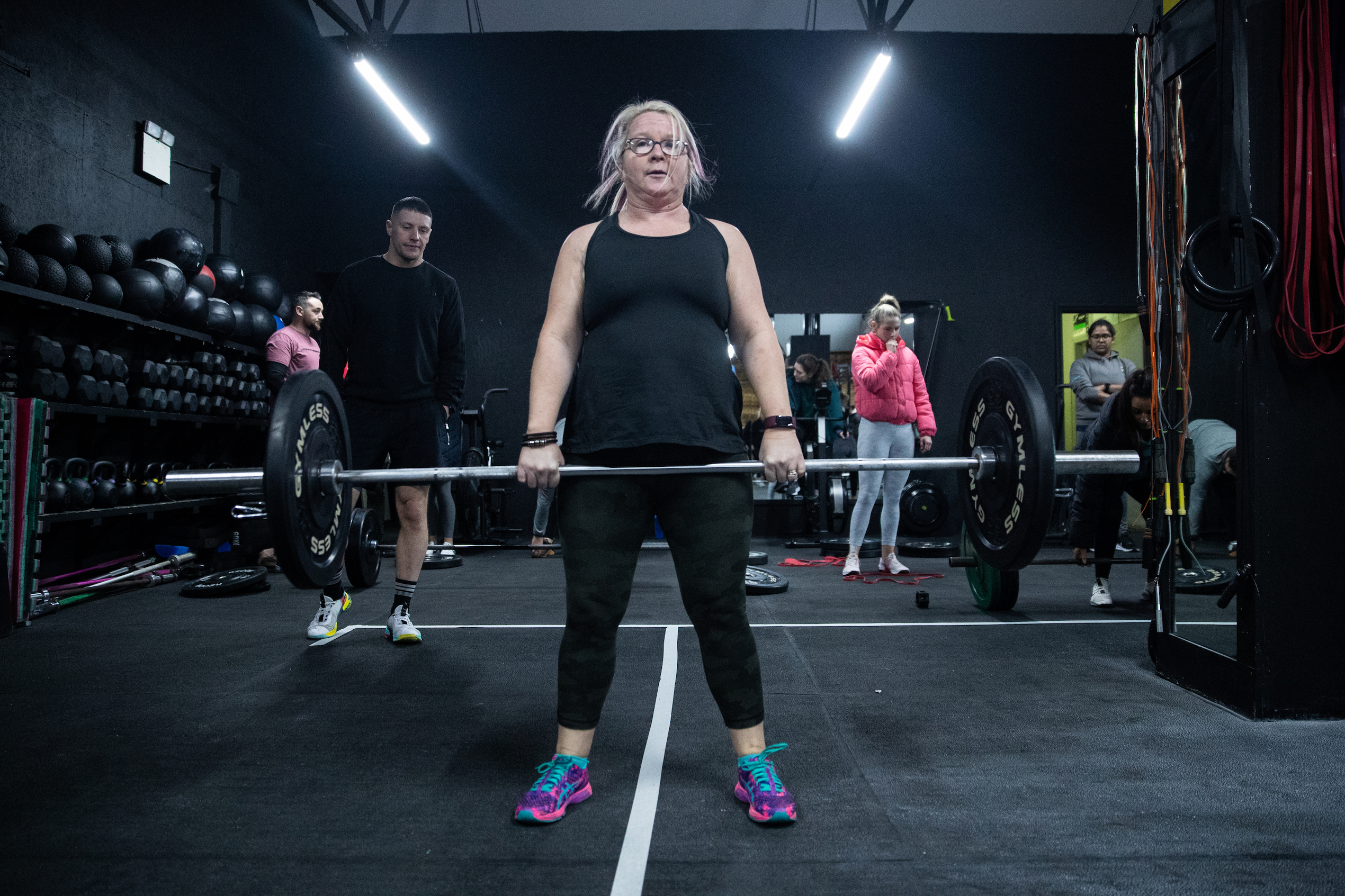
In the world of CrossFit, certain workouts have earned legendary status. Known as benchmark and Hero workouts, these tests of fitness challenge athletes physically and mentally while revealing strengths, weaknesses, and areas for growth. Among the most famous are “Fran,” “DT,” and “Diane.” Each workout has its own structure and demand, but together they demonstrate how CrossFit develops athletes both organically, through physical adaptations, and neurologically through improved motor control, coordination, and efficiency.
Understanding why these workouts are programmed and what adaptations they produce helps athletes approach training with purpose. Let’s break down how these three iconic workouts contribute to long term health and performance.
Fran: Power, Speed, and Neurological Efficiency
“Fran” is one of the most recognizable CrossFit benchmark workouts. It consists of:
21-15-9 reps for time of:
- Thrusters (95/65)
- Pull-ups
At first glance, the workout seems simple. However, the combination of a full body barbell movement with a gymnastics pulling exercise creates an intense metabolic demand while challenging the athlete’s ability to move efficiently under fatigue.
Organic Adaptations
Physiologically, Fran develops several systems simultaneously. Thrusters train the legs, hips, and shoulders while requiring strong core stabilization. Pull-ups challenge the upper back, grip, and arms. Because the workout is performed at high intensity and typically lasts only a few minutes, it heavily taxes the glycolytic energy system.
Over time, repeated exposure to workouts like Fran improves:
- Muscular endurance in the legs and shoulders
- Lactate tolerance
- Cardiovascular efficiency under high intensity
- Total body power output
Athletes become better at sustaining fast, powerful movements even while their muscles are under metabolic stress.
Neurological Adaptations
Fran also drives neurological efficiency. The thruster requires synchronized extension of the hips, knees, and arms, making it a highly coordinated movement. Pairing this with quick cycling pull-ups forces the nervous system to refine motor patterns.
As athletes repeat the workout over months and years, their nervous system learns to recruit muscles more efficiently. Movements become smoother, transitions faster, and energy expenditure lower. What once felt chaotic becomes controlled intensity.
DT: Strength Endurance and Barbell Cycling Mastery
“DT” is a classic Hero workout structured as:
5 rounds for time:
- 12 Deadlifts (155/105)
- 9 Hang Power Cleans
- 6 Push Jerks
All performed with the same barbell.
This workout challenges athletes to move moderate weight efficiently across multiple barbell movements without rest.
Organic Adaptations
DT primarily develops strength endurance. Athletes must maintain grip, posterior chain strength, and shoulder stability while cycling through 155 pounds or scaled equivalents for multiple rounds.
Key physical adaptations include:
- Posterior chain development through repeated deadlifts
- Explosive hip extension in hang power cleans
- Shoulder and triceps endurance through push jerks
- Grip strength and stamina
DT also trains the body to buffer fatigue during repeated barbell cycling. The muscles and cardiovascular system adapt to clearing metabolic byproducts faster, allowing athletes to sustain higher power output across rounds.
Neurological Adaptations
From a neurological standpoint, DT sharpens barbell efficiency. The athlete must maintain precise technique as fatigue accumulates. Poor bar paths or inefficient timing quickly lead to failure.
Repeated training with workouts like DT improves:
- Barbell cycling rhythm
- Intermuscular coordination
- Motor pattern consistency under fatigue
The nervous system becomes better at sequencing movements automatically, allowing athletes to conserve mental and physical energy.
Diane: Posterior Chain Power and Gymnastics Strength
“Diane” is another classic benchmark workout structured as:
21-15-9 reps for time of:
- Deadlifts (225/155)
- Handstand Push-ups
This pairing blends heavy posterior chain strength with vertical pressing gymnastics.
Organic Adaptations
Diane places significant demand on the posterior chain, including the glutes, hamstrings, and spinal erectors through high rep deadlifts. At the same time, handstand push-ups challenge shoulder stability, pressing strength, and core control.
The physical benefits include:
- Increased posterior chain strength and endurance
- Shoulder pressing strength
- Core stability through inverted positions
- Upper body muscular endurance
Because athletes move quickly between heavy lifting and inverted pressing, the cardiovascular system must adapt to rapid transitions between muscular demands.
Neurological Adaptations
Handstand push-ups require substantial neurological coordination. The athlete must stabilize the body upside down while generating pressing force. This challenges balance, proprioception, and spatial awareness.
Pairing these with deadlifts forces the nervous system to switch between movement patterns rapidly. Over time, this improves:
- Body awareness in inverted positions
- Shoulder stability and motor control
- Efficient force transfer through the core
Athletes become more capable of producing power while maintaining positional control.
Why These Workouts Matter
Benchmark and Hero workouts serve an important role in CrossFit training. They create consistent tests that allow athletes to measure progress over time. When an athlete revisits Fran, DT, or Diane months later, improvements in time, efficiency, or movement quality reveal real physiological and neurological development.
More importantly, these workouts reflect CrossFit’s core philosophy: broad, general, and inclusive fitness. They train multiple energy systems, movement patterns, and muscle groups simultaneously.
Fran develops speed and metabolic conditioning.
DT builds strength endurance and barbell efficiency.
Diane enhances posterior chain power and gymnastics control.
Together, they create well rounded athletes capable of producing power, sustaining effort, and maintaining coordination under fatigue.
The Bigger Picture of Athlete Development
The true value of these workouts goes beyond a score on the whiteboard. They represent opportunities for the body and nervous system to adapt.
Physically, athletes develop stronger muscles, more resilient joints, and improved cardiovascular capacity. Neurologically, they learn to move with precision, efficiency, and confidence.
Over time, these adaptations translate into better health, improved athletic performance, and a greater capacity to handle physical challenges both inside and outside the gym.
That’s the real purpose behind workouts like Fran, DT, and Diane: not just to test fitness, but to build it.


