Have you ever walked out of the gym feeling disappointed because you did not sweat enough? Maybe you questioned whether you worked hard enough, burned enough calories, or even improved your fitness that day. Many individuals associate the amount of sweat they produce during a workout with how effective that workout was. Unfortunately, this misconception can lead people to chase the wrong things when trying to improve their health and fitness.
Although sweating can be a result of exercise, it is not a measurement of how effective your workout was. To understand why, we first need to understand why we sweat as humans.
Why Do We Sweat?
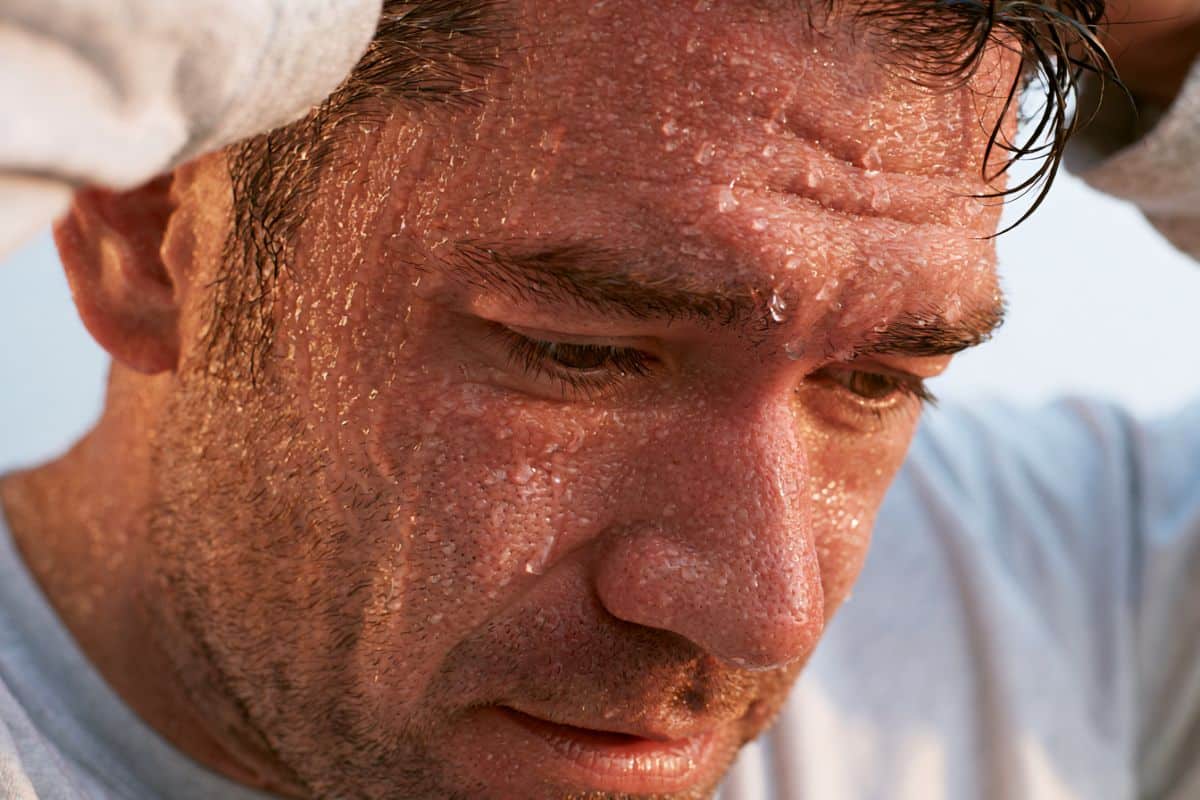
The primary reason we sweat is to regulate our body temperature and prevent ourselves from overheating. When our internal body temperature rises, our nervous system signals our sweat glands to release sweat onto the surface of our skin. As that sweat evaporates, it helps cool our bodies down. This process is known as thermoregulation.
Several factors can influence how much we sweat, including genetics, age, environmental temperature, humidity, clothing, exercise intensity, and how acclimated we are to heat.
We live in Houston, where it is not uncommon to start sweating simply by walking to your car, checking your mail, or taking your trash outside. Are you getting significantly fitter by doing any of these activities simply because you are sweating? No. Your body temperature has increased, and your body is responding accordingly to prevent itself from overheating.
The same physiological process occurs when you exercise.
Does Sweating Mean You Are Losing Body Fat?
Another common misconception is that the more you sweat, the more body fat you are losing. This is one of the reasons why some individuals wear multiple layers of clothing while exercising, purchase sweat suits, or spend extended periods sitting inside a sauna.
Although you may weigh less immediately after doing any of these activities, the majority of that immediate weight loss is likely the result of losing water. Once you rehydrate and replenish the fluids you lost, much of that weight will return.
There is a significant difference between losing weight and losing body fat. Losing body fat requires your body to utilize its stored energy over time. Establishing a sustainable caloric deficit, exercising consistently, consuming adequate protein, and developing healthy nutritional habits can all contribute to reducing body fat while preserving muscle mass.
You can lose body fat without being covered in sweat, just as you can sweat excessively without losing a meaningful amount of body fat.
Sweat Is Not a Measurement of Workout Intensity
Can you sweat while working out? Absolutely. Can sweating be a result of an intense workout? Of course. As your muscles work, they produce heat, which can increase your body temperature and cause you to sweat.
However, sweating can correlate with exercise intensity without being a reliable measurement of it.
Let's say today's workout at CrossFit Be Someone is five sets of five heavy back squats. You are resting four minutes between sets to allow your body to recover before attempting another heavy set. By the end of the workout, you may have barely broken a sweat.
Does that mean you did not have an effective workout? Absolutely not. You challenged your muscular and nervous systems, stimulated adaptations that can improve your strength, and placed mechanical stress on your bones that can help improve bone density over time.
Now imagine performing the same conditioning workout in the middle of summer and again on a cold winter morning. You perform the same movements, use the same weights, and finish in the same amount of time. However, you sweat significantly less during the winter.
Was your workout less effective because you did not sweat as much? No. You accomplished the same amount of work under different environmental conditions.
What Should You Use to Measure the Effectiveness of a Workout?
Instead of focusing on how much you sweat, start paying attention to your effort, intensity, and overall performance. At CrossFit, we define intensity as power, or the rate at which we perform work. Intensity is also relative to each individual's physical and psychological capacity.
Here are five things you can evaluate instead of how much you sweat:
- Effort: How much effort did you give relative to your current abilities?
- Intensity: How much work were you able to accomplish in a given amount of time?
- Strength: Are you capable of lifting heavier weights than before?
- Movement quality: Are you performing movements more safely, efficiently, and effectively?
- Performance: Are you becoming fitter and more capable over time?
Your goal should not be to walk out of the gym exhausted and covered in sweat every single day. Your goal should be to create the appropriate physiological adaptations that will improve your overall health and fitness. That also means understanding that not every workout requires maximum effort.
Let Us Help You Improve Your Health and Fitness
At CrossFit Be Someone in Houston, we focus on developing healthier, stronger, and more physically capable individuals through intentional programming, professional coaching, and accountability.
We proudly help individuals throughout the Heights, Greater Heights, Garden Oaks, River Oaks, and Memorial communities through our Group CrossFit Classes, Personal Training, Semi-Personal Training, and Legends Program for adults 55 and older.
If you are ready to take ownership of your health and fitness, we would love to help you.
Schedule a FREE consultation to learn more about our Group Training, Personal Training, Semi-Personal Training, or Legends Program.
Remember, the purpose of exercise is to improve your health and fitness, not to see how much sweat you can produce.
Don't judge your workout by how much you sweat. Judge it by your effort, intensity, and output.